


Description
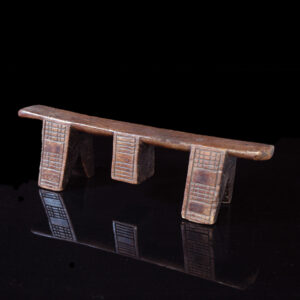
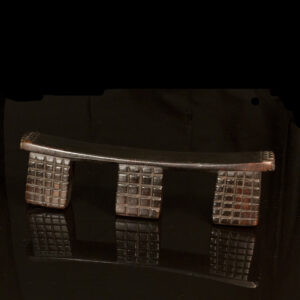
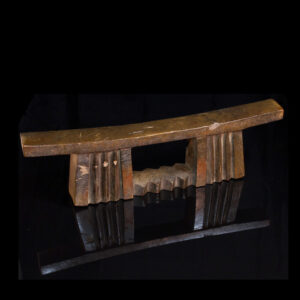
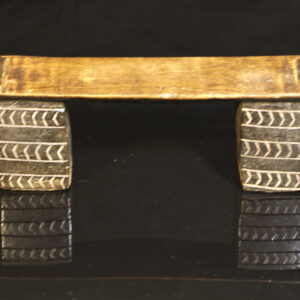
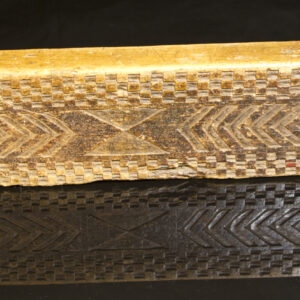
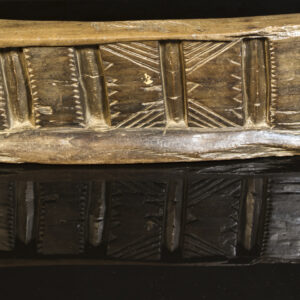
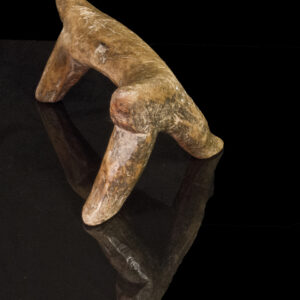
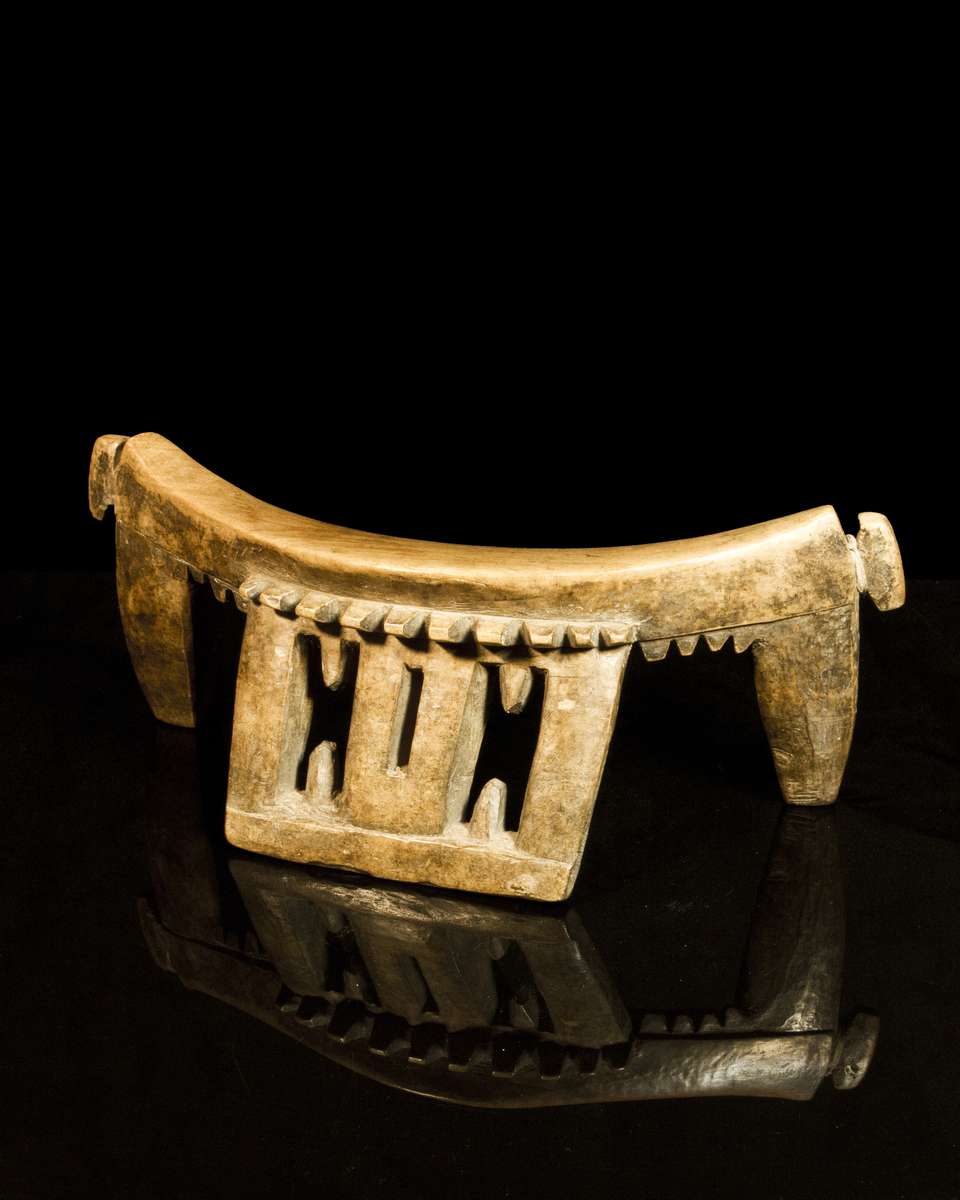
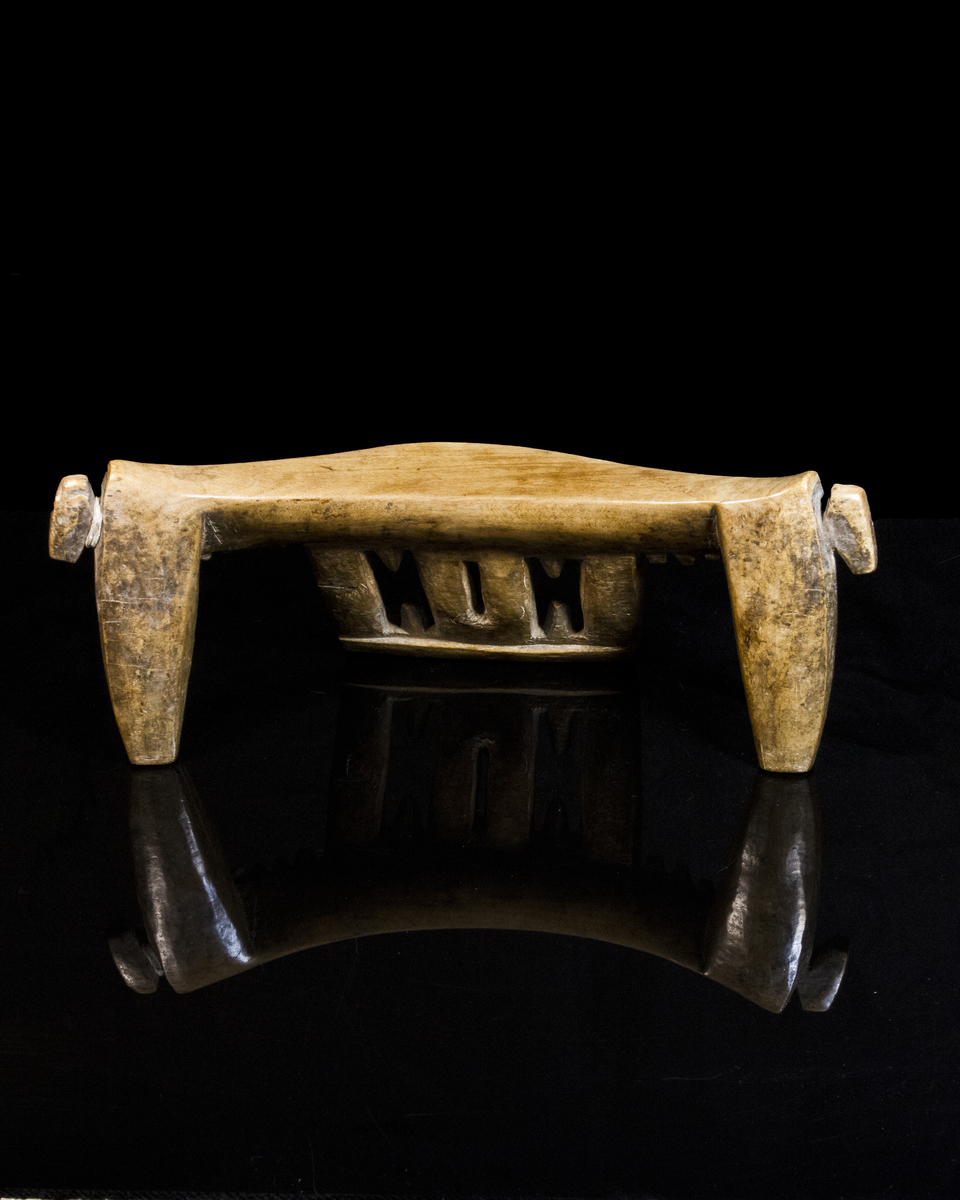
An openwork side panel, pierced with geometric cut-outs, defines this openwork Dinka headrest, DHR-1070. In honey-toned wood, it measures 7 x 18.5 x 7.5 in. At 18.5 in, it is the longest of our Dinka headrests. In addition, carved teeth and angular ornament enrich the form.
Record for DHR-1070
This authentic work originates with the Dinka, in the Republic of South Sudan. Along one side, geometric cut-outs pierce a flat panel, so light passes through the body. Carved teeth and sharp, angular details further distinguish the piece. For women, these elements also hold the hair in place, so it does not tangle during sleep.
Design of the Openwork Dinka Headrest
Dinka headrests usually have two or three legs, which the literature calls “links.” On the openwork Dinka headrest, however, the pierced panel competes with the legs for attention. As a result, the eye moves between solid and void. The honey tone, meanwhile, warms the geometry. Few headrests in our collection combine so many carved elements.
Hair, Sleep and Ancestry
Beyond its role in protecting a sleeper’s hair, the headrest holds spiritual weight. By social custom, the Dinka conceive of it as an instrument for contacting the dead of their lineage. Nettleton observes that ancestors send dreams, and that headrests are where dreams take place (Nettleton 2007). Therefore, an heirloom from a senior relative grows in significance. The object thus connects personal care with family memory.
Among our Dinka headrests, this example carries the most carved detail. Others, such as DHR-1170, rely on bare legs and outline alone. Its honey color also links it to DHR-1310, although the forms differ greatly. Thus it offers a counterpoint to the plainer pieces in the group.
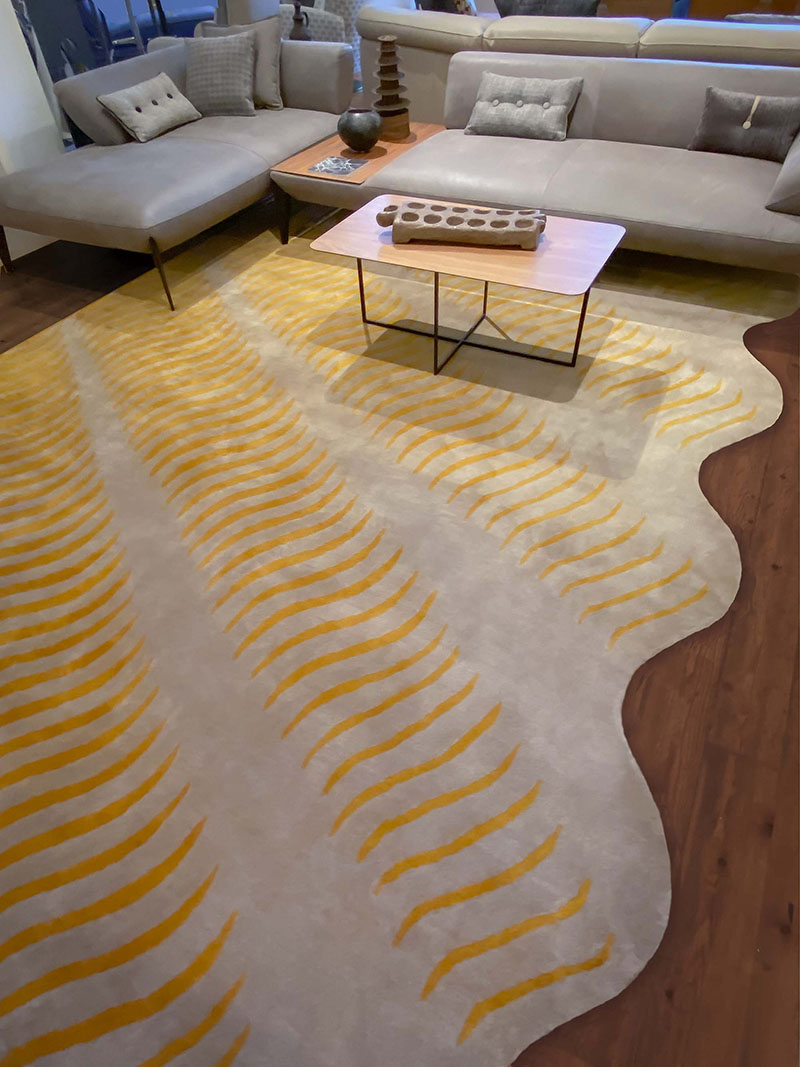
Backlighting reveals the cut-outs best, so consider a window ledge or a lit niche. Also, a dark backdrop sharpens the pierced geometry. Finally, we welcome you to view DHR-1070 at our Burlington showroom.
Explore the Collection
Discover more in our headrest collection, or browse all antiques and ethnographic objects. You may also appreciate Headrest No. 1042 (Zulu People, Southern Africa) and Mkhulu Mkwanazi Scallop Buttress No.1041. To view this piece in person, visit our Burlington showroom or book a private consultation. For broader context, read about African art.
Literature
Nettleton, Anitra. 2007. African Dream Machines: Style, Identity and Meaning of African Headrests. Johannesburg: Wits University Press.