
Description
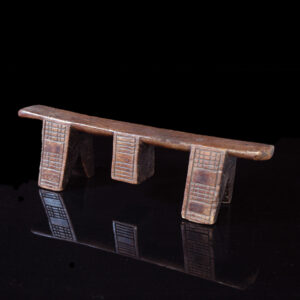
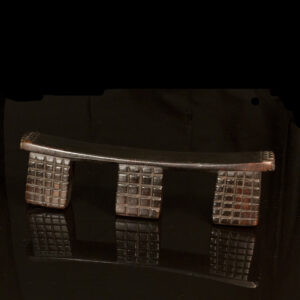
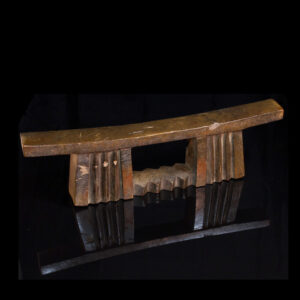
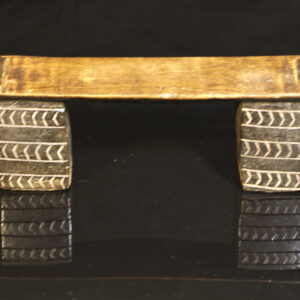
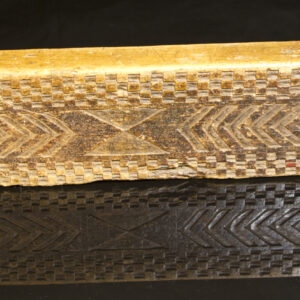
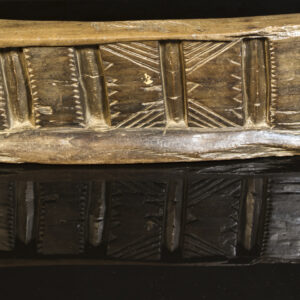
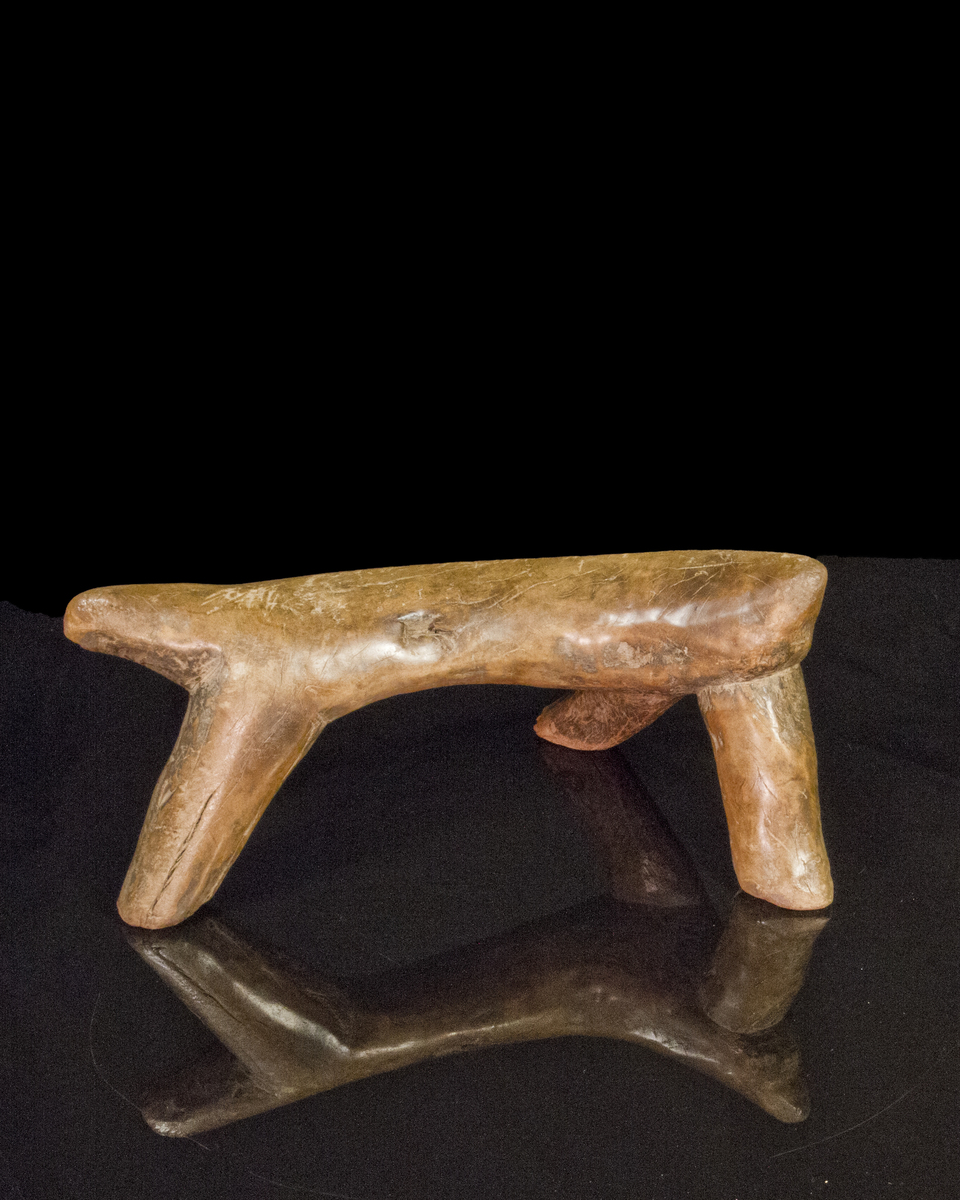
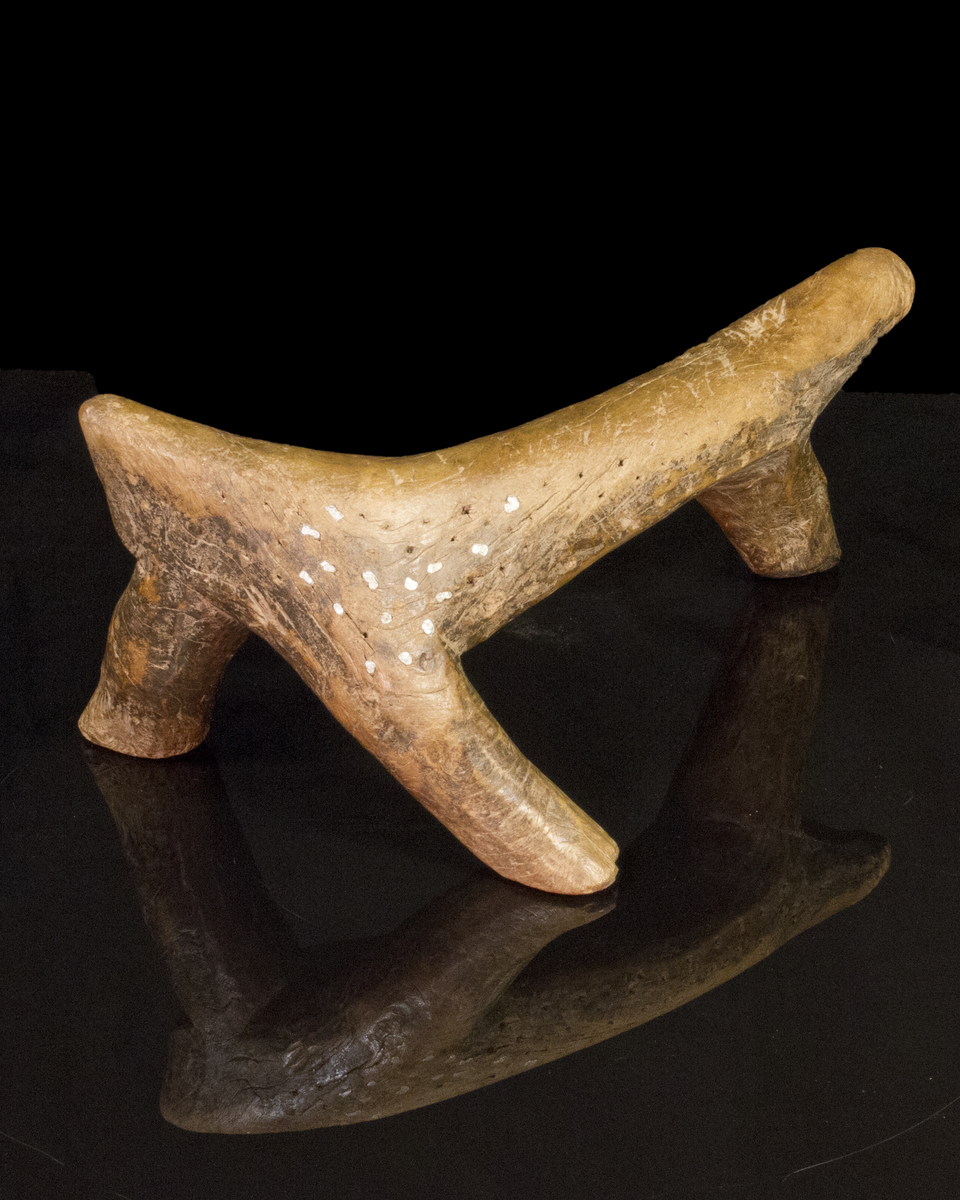
The most compact Dinka headrest in our group, DHR-1170 measures just 14 in long. Its full dimensions are 9 x 14 x 6.5 in. Three legs carry the top, and the pale wood shows a gentle, weathered surface. Even so, the small scale does not diminish its presence.
DHR-1170: Catalogue Entry
We offer this authentic headrest as a work of the Dinka, a people of the Republic of South Sudan. Weathering has softened the wood to a pale, matte tone. Three legs stand beneath a short top, set close together. As a result, the object feels concentrated and self-contained. It fits easily in two hands, yet it holds a shelf with authority.
Why the Compact Dinka Headrest Holds Attention
Dinka headrests feature two, three or four legs, which writers term “links.” On the compact Dinka headrest, three links frame a tight composition. In other words, little separates one leg from the next. The silhouette, therefore, depends on fine adjustments of angle and spacing. Such restraint gives a small object real authority.
Sleep, Dreams and the Ancestors
For the Dinka, a headrest unites practical and spiritual purposes. Social custom treats it as the sleeper’s line to the ancestral world. According to Nettleton, dreams come from the ancestors, and sleepers receive them on headrests (Nettleton 2007). Consequently, one inherited from an elder holds special force. Each night, then, the sleeper rests within a family line.
Where DHR-1070 extends to 18.5 in, this headrest stops at 14 in. Even so, its 9 in height gives it a lifted stance. Consequently, the proportions feel upright rather than squat. The weathered surface also distinguishes it from the honey tones of DHR-1310 and DHR-1070.
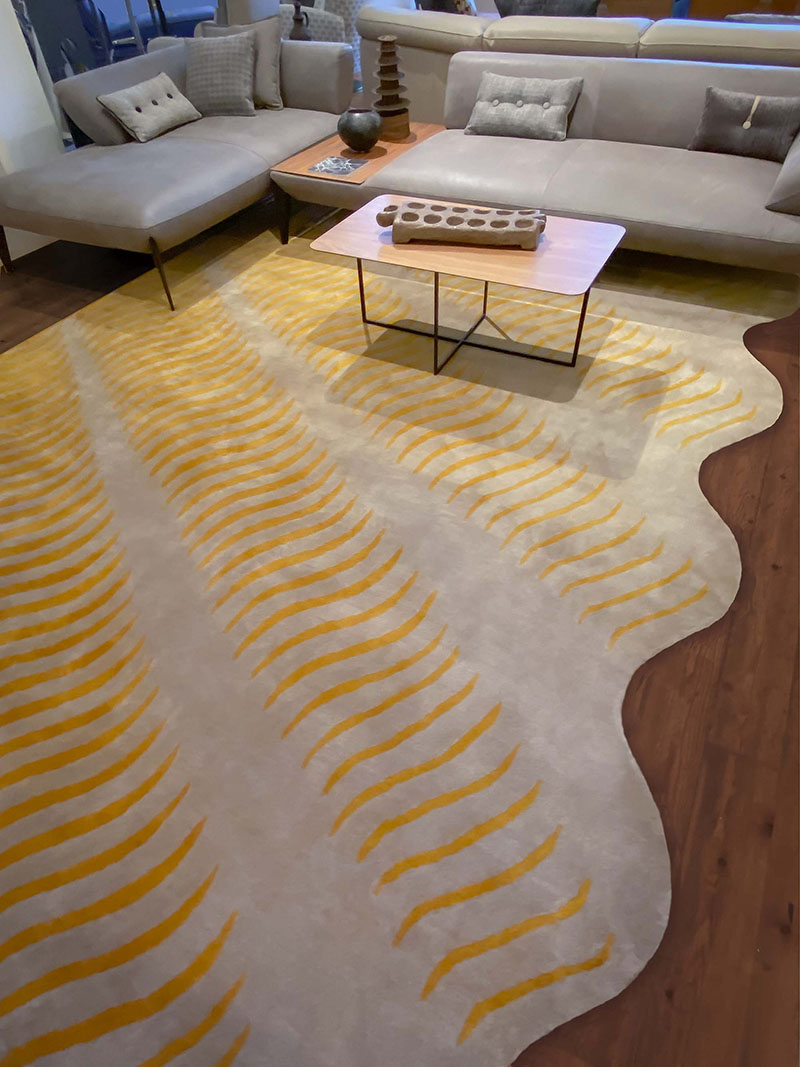
A compact Dinka headrest like this one suits a bookshelf, a desk or a small vitrine. In addition, its weathered surface pairs naturally with linen and stone. To handle it in person, visit our Burlington showroom.
Explore the Collection
Discover more in our headrest collection, or browse all antiques and ethnographic objects. You may also appreciate Headrest , No. 1160 (Dinka People, South Sudan) and Headrest, No.1070 (Dinka People, South Sudan). To view this piece in person, visit our Burlington showroom or book a private consultation. For broader context, read about African art.
Literature
Nettleton, Anitra. 2007. African Dream Machines: Style, Identity and Meaning of African Headrests. Johannesburg: Wits University Press.