Description
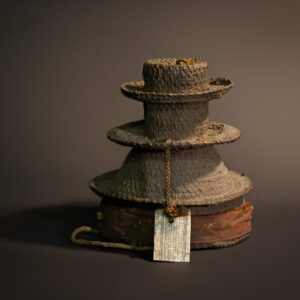
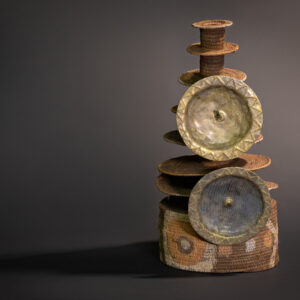
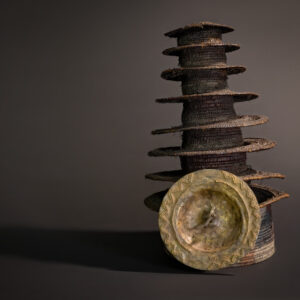
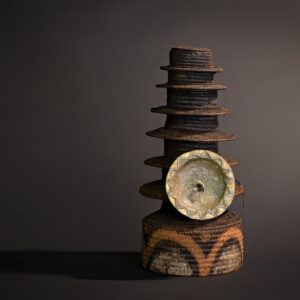
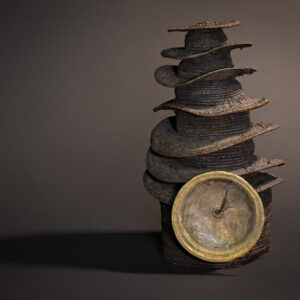
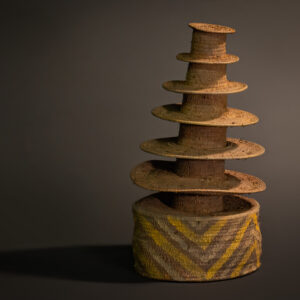
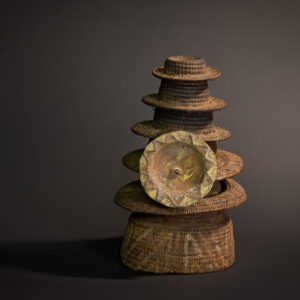
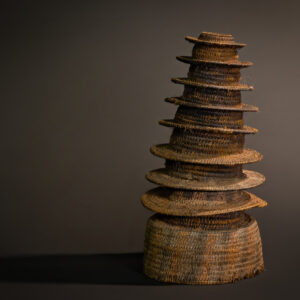
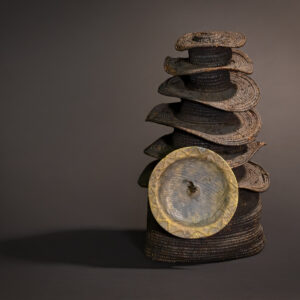
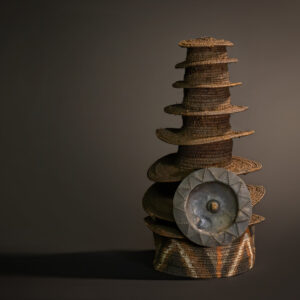
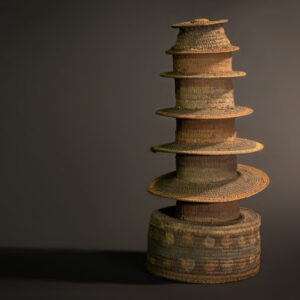
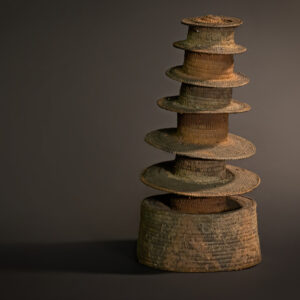
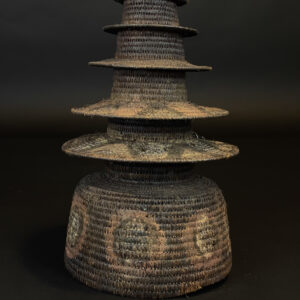
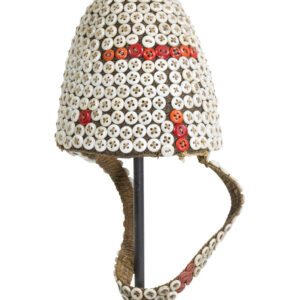
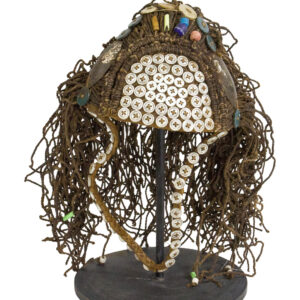
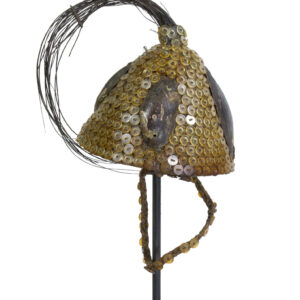
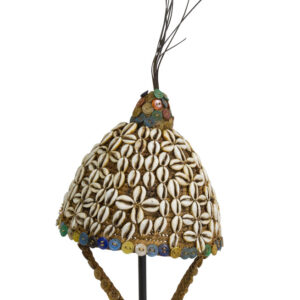
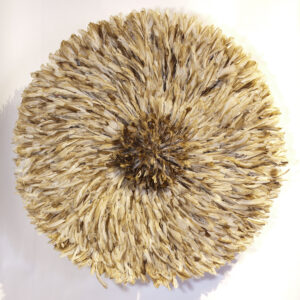
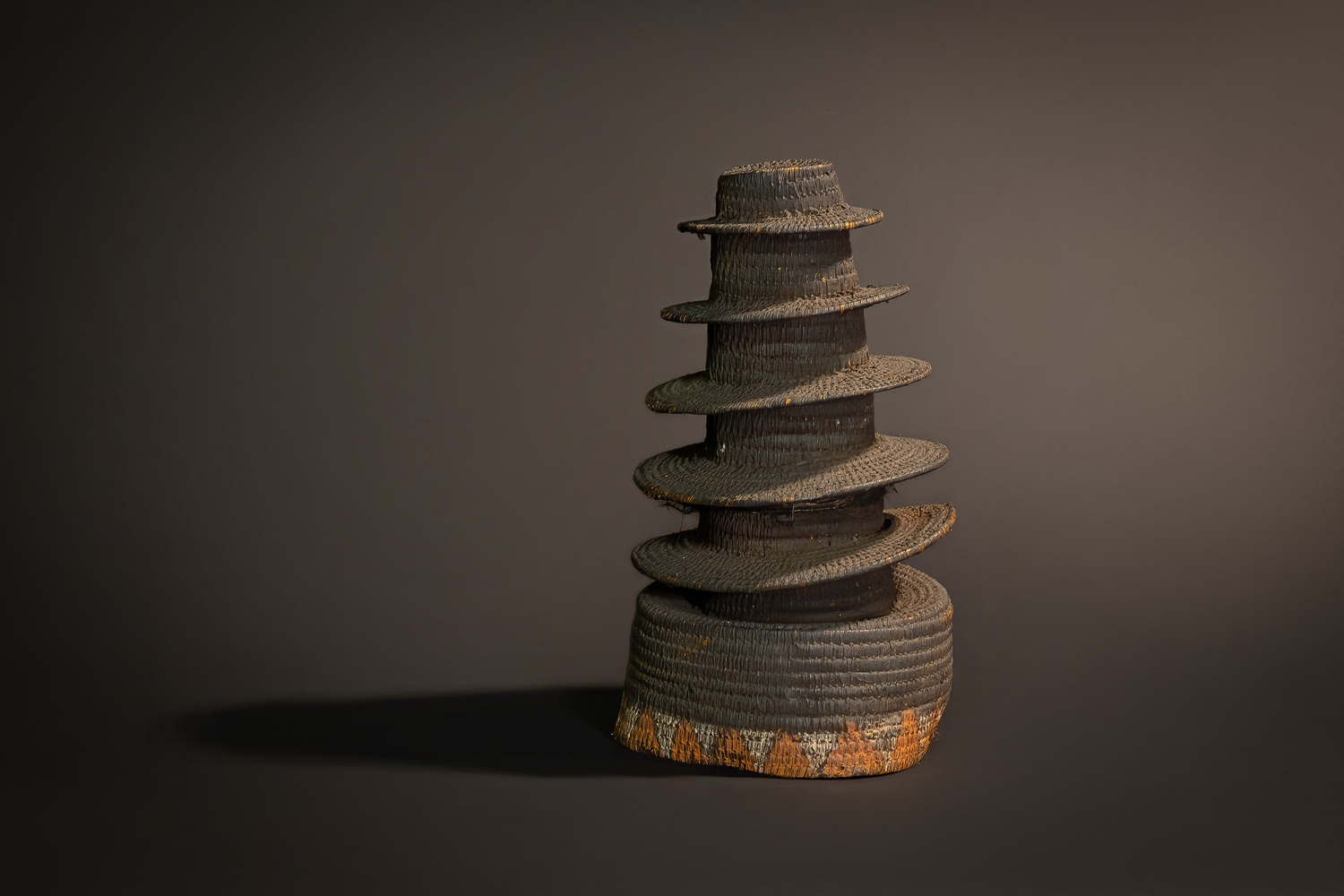
This authentic minimalist Ekonda Botolo hat radiates power through restraint. It stands in clear contrast to the brass-laden grandeur of its companions. Instead of frontal ornament, it relies on architectural symmetry, a subtly variegated patina, and a commanding base encircled with geometric earth-toned pigment work.
Cultural Context
The hat offers a rare glimpse into the quieter, perhaps more introspective side of chiefly regalia. Without brass medallions, it aligns with Ekonda traditions of object rotation. In those traditions, certain regalia served intimate rites or transitional ceremonies. These often concerned inheritance, divination, or mourning. According to Biebuyck and Van den Abbeele (1984), the visual grammar of Ekonda regalia is not merely decorative. Rather, it is dialogic. In other words, it communicates status, spiritual affiliation, and the wearer’s active role within a cosmological system.
Form and Craftsmanship of the Minimalist Ekonda Botolo Hat
The headdress rises in a stately series of concentric brims. Tightly coiled and layered, they follow a refined sense of proportion. Moreover, time-worn flecks of ochre and camwood pigment accent each tier. These flecks remain from ritual application. The base shows a continuous band of chevron-like motifs in faded white, red oxide, and clay brown. They likely symbolize territorial lineage, river deities, or protective spiritual thresholds.
Provenance
Acquired in Kinshasa in the early 1970s from a young Ekonda noble.
Display
Above all, give it enough space so that viewers can appreciate it from several angles. A neutral wall behind it lets the silhouette and surface texture stand out clearly. Because of its restrained elegance and rich surface, this piece appeals to collectors, scholars, and contemporary designers. In particular, it suits anyone drawn to minimalism rooted in spiritual complexity. A minimalist Ekonda Botolo hat pairs well with plaster walls, pale oak, or stone. Its quiet surface rewards slow looking, so a position near a reading chair or desk works well. Keep it out of direct sun and away from humidity. You are welcome to view it at our Burlington showroom.
Explore the Collection
Discover more in our headdress collection, or browse all antiques and ethnographic objects. You may also appreciate Celestial Balance and Crown of Ascent. To view this piece in person, visit our Burlington showroom or book a private consultation. For broader context, read about African art.
Literature
Biebuyck and Van den Abbeele (1984)