Description
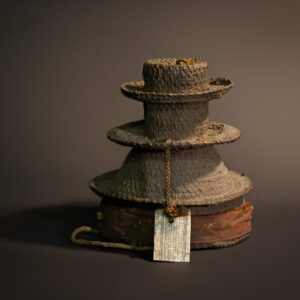
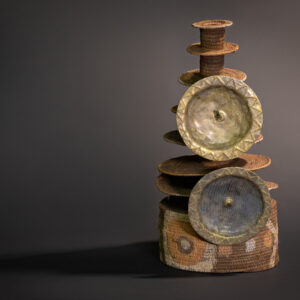
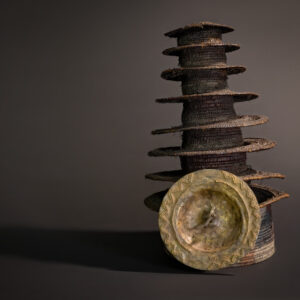
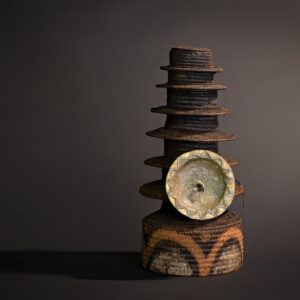
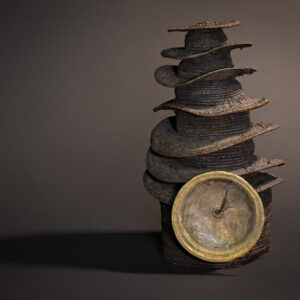
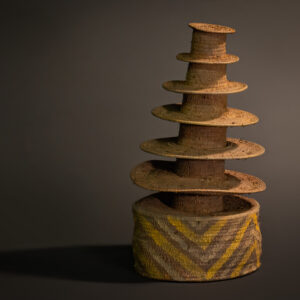
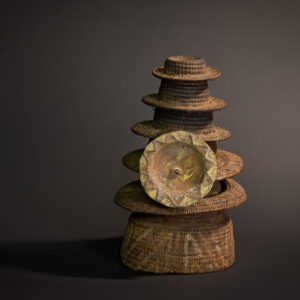
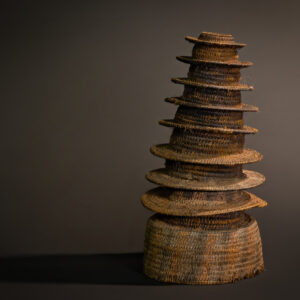
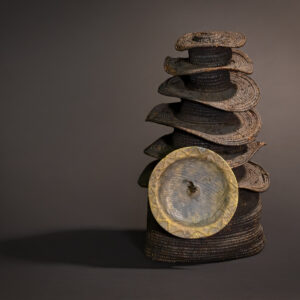
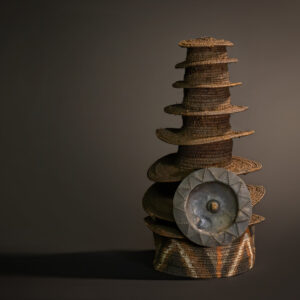
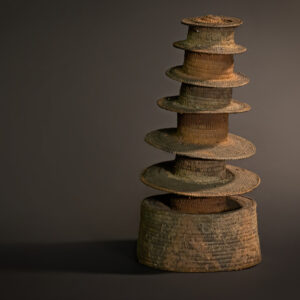
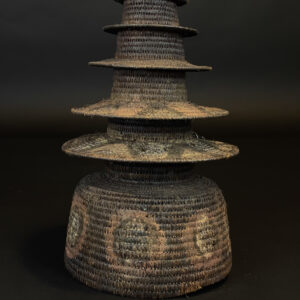
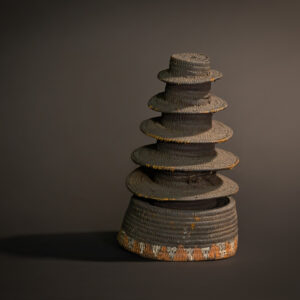
This authentic seven tier Ekonda hat is a Botolo that evokes natural harmony and ancestral balance. Each solemn tier marks a sacred phase in the chief’s ceremonial journey, from earthly roots to spiritual elevation. Moreover, the piece shows cultural refinement and rhythmic precision.
Cultural Context
In central African cosmology, the number seven holds deep spiritual significance. For the Ekonda, it resonates with divine order and cyclical life. It also traces the complete arc of human experience: birth, initiation, maturity, leadership, wisdom, death, and ancestral rebirth. Only the nkumu (chief) wore this structure. Therefore, it was more than a sign of temporal power. It was also a visual invocation of spiritual preparedness and legacy stewardship.
Form and Craftsmanship of the Seven Tier Ekonda Hat
Makers wove the headdress from vegetal fibers gathered in the equatorial forests. Its levels sit spaced like the rings of a sacred tree. Similarly, they recall ripples across still water. Organic pigments of sienna, ochre, and soot wrap the cylindrical form. Meanwhile, the base carries geometric, almost lunar-like patterns. These suggest ancestral markings or spiritual wayfinding symbols. Because it has no brass, the hat emphasizes sculptural clarity and philosophical intent.
Provenance
Acquired in Kinshasa in the early 1970s from a young Ekonda noble of esteemed descent.
Scholarship
As Biebuyck and Van den Abbeele note in The Power of Headdresses (1984), such works are more than objects. Instead, they embody continuity. They reflect the chief’s duty as custodian of tradition and transmitter of cultural law.
Display
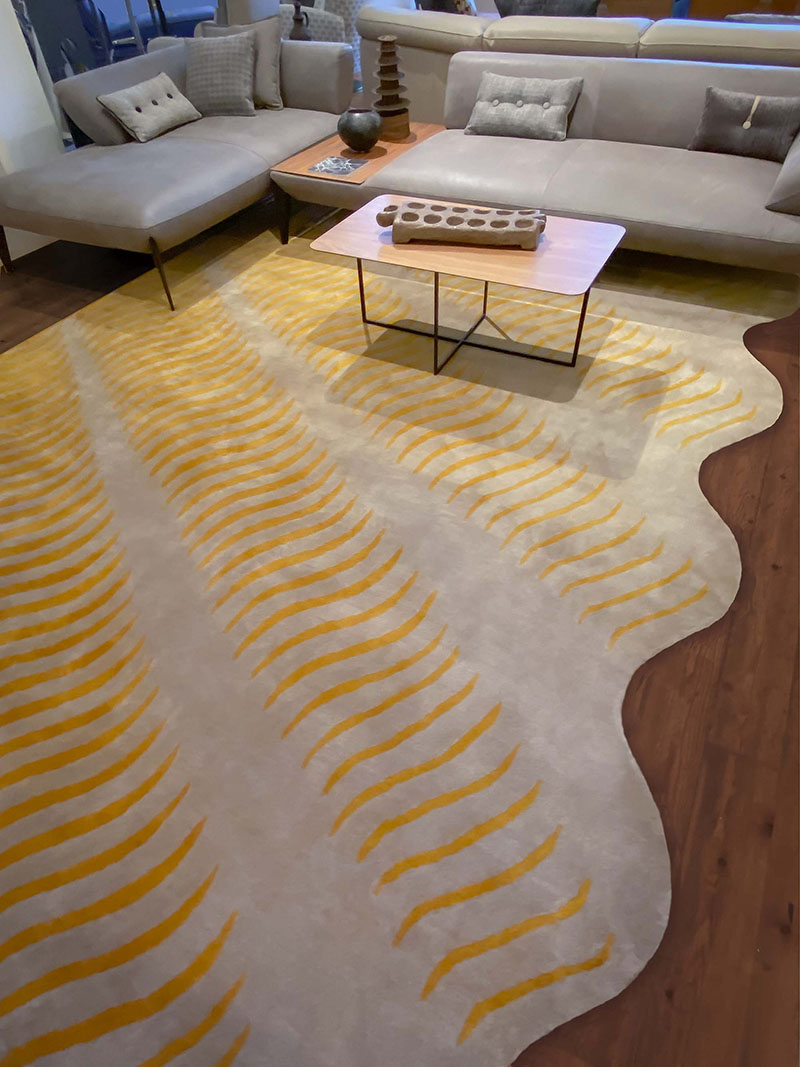
Above all, give it enough space so that viewers can appreciate it from several angles. When paired with contemporary furniture, it adds depth and a clear sense of history to a room. A seven tier Ekonda hat sits naturally in a calm, considered interior. A pedestal or deep shelf lets its tiers cast soft shadows. In addition, protect the fibers from direct sun, heat, and moisture. Beauty carries responsibility, and careful display honors that. You are welcome to view it at our Burlington showroom.
Explore the Collection
Discover more in our headdress collection, or browse all antiques and ethnographic objects. You may also appreciate Spiral of Succession and Cycle of Continuity. To view this piece in person, visit our Burlington showroom or book a private consultation. For broader context, read about African art.
Literature
The Power of Headdresses by Biebuyck and Van den Abbeele (1984)