
Description
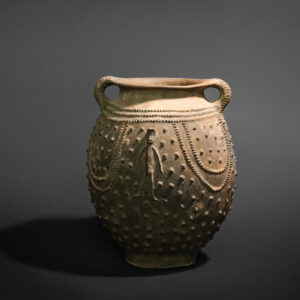
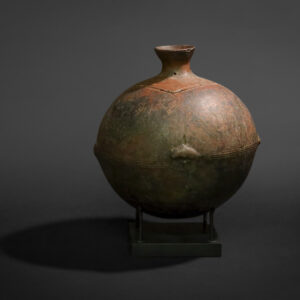
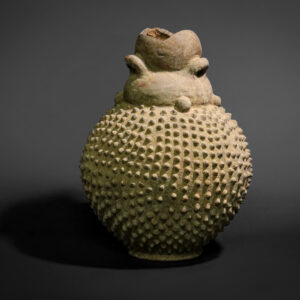
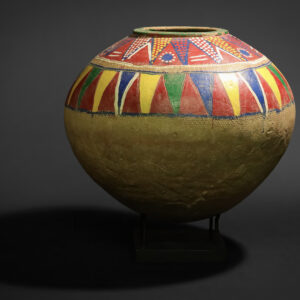
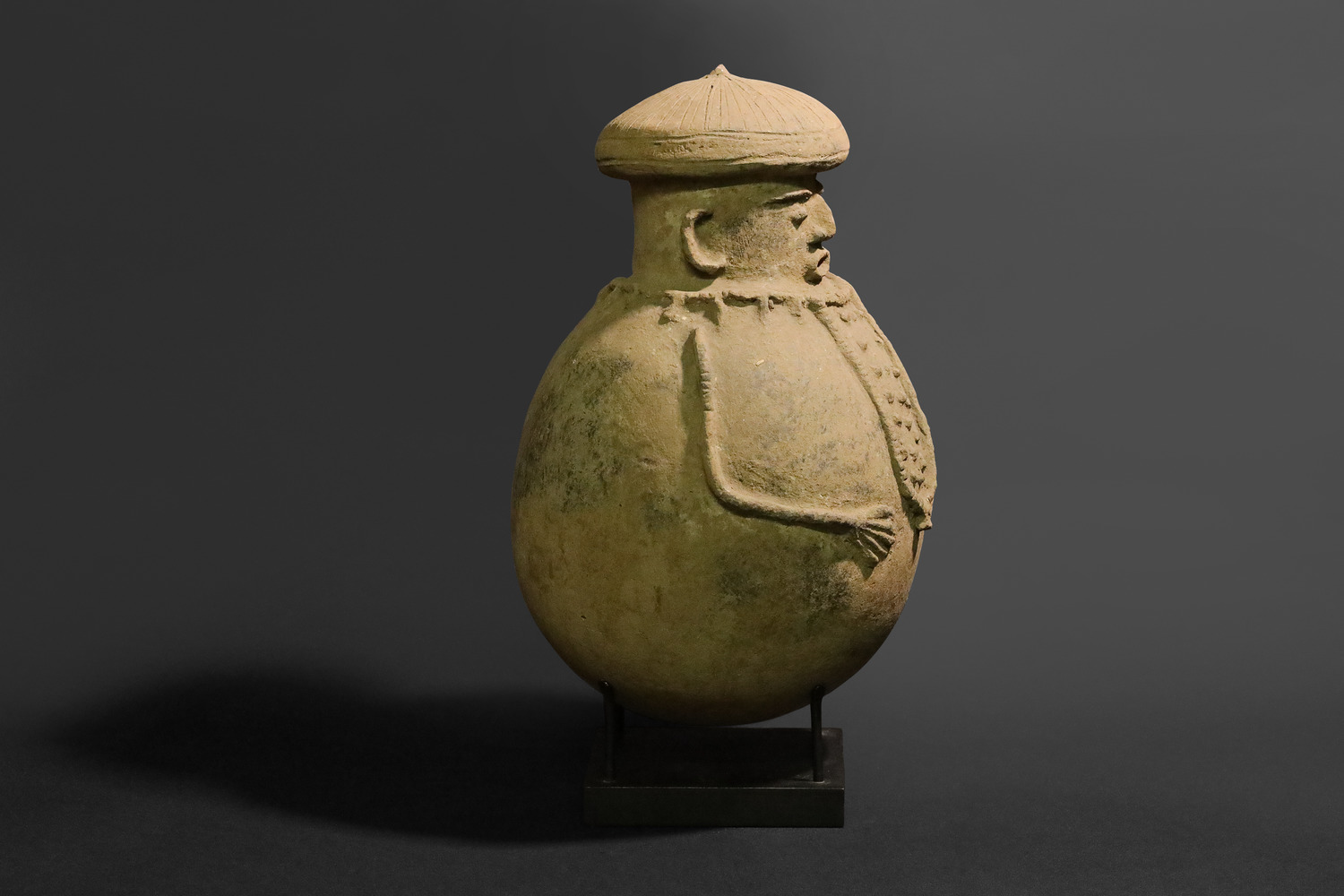
This authentic Azande altar vessel was hand constructed from terra-cotta clay by the Azande ethnic group of Congo. The potter modeled it as a seated male figure. As a result, the work operates at once as portrait, container and ritual object.
Cultural Context
The Azande are an agrarian people. In addition, they hold long traditions in ceramics and pottery that reach back to the Iron Age. This vessel belongs to that lineage of practiced, confident clay work.
Anthropomorphic vessels of this type serve for the consumption of local wine and herbal remedies. They appear in domestic settings and also during various cultural enactments. Consequently, the form moves between household use and communal ceremony without changing its character.
The Azande Altar Vessel: Form and Craftsmanship
The figure presents rounded lips, a protruding nose and closed eyes, which lend the face a composed, inward expression. Above, a beveled headdress crowns the head. Meanwhile, two stick-thin arms wrap around a full, rounded belly that also forms the body of the vessel.
At the front, in the area of a necktie, the potter applied a series of raised bumps. These serve two purposes. First, they articulate the surface with rhythm and texture. Second, they provide a secure grip when a hand lifts and holds the vessel.
The modeling is economical and deliberate. In particular, the contrast between the slender arms and the generous belly gives the figure its quiet humor. The potter set each feature with care, so the face reads clearly from several angles. Therefore, the vessel holds its presence as sculpture even when empty.
Above all, the work shows how Azande potters joined function and figuration. The container is the body, and the body is the container. That unity sits at the center of this tradition.
Display
An Azande altar vessel shows best at eye level on a plinth, console or library shelf. For example, soft side light will draw out the raised bumps and the curve of the belly, while a plain ground keeps the silhouette legible. Dust gently with a soft, dry brush and avoid moisture. Our showroom in Burlington, North Carolina welcomes viewing by appointment.
Explore the Collection
Discover more in our pottery and terra-cotta collection, or browse all antiques and ethnographic objects. You may also appreciate Lidded Pot, (Lobi People, Burkina Faso) and Storage Vessel (Dogon People, Mali). To view this piece in person, visit our Burlington showroom or book a private consultation. For broader context, read about African art.
Literature
Schildkrout, E. 1999. “Gender and Sexuality in Mangbetu Art.” In Unpacking Culture: Art and Commodity in Colonial and Postcolonial Worlds. Ed. by Ruth B. Phillips and Christopher B. Steiner. Berkeley: University of California Press.